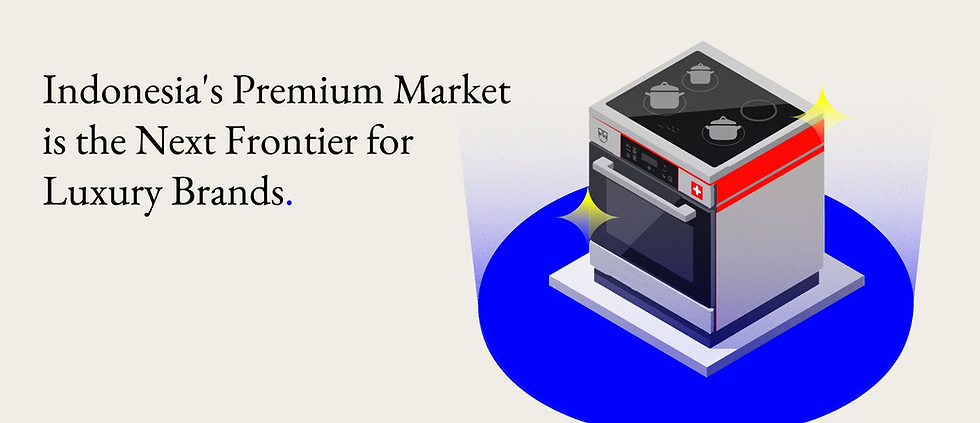
When Swiss luxury appliance maker V-ZUG formally entered Indonesia, it marked more than the arrival of a new name in the country’s premium kitchen market. It offered a glimpse into how Southeast Asia’s luxury economy is evolving and what that means for Swiss brands looking east.
Indonesia is often discussed as a mass market, but its premium segment tells a different story. A growing number of affluent entrepreneurs, business families and globally minded professionals are investing in homes that reflect a new idea of luxury: spaces that are thoughtfully designed, technologically seamless and built to last. In this context, products that embody craftsmanship and understated elegance are finding a receptive audience.
For brands like V-ZUG, the opportunity is real, but it is also nuanced. Luxury appliances are rarely purchased through direct consumer channels alone. Decisions are shaped by a wider ecosystem that includes property developers, architects, interior designers and specialist kitchen studios. These stakeholders act as trusted advisors, making local relationships every bit as important as the product itself.
Competition is already well established. European players such as Miele and Gaggenau Industrie, S.A.S. have spent years building their presence in Indonesia’s luxury residential market, while a new generation of Chinese brands is steadily moving upmarket with compelling smart-home features and more accessible price points.
This is precisely why V-ZUG’s entry matters. It highlights that the opportunity for Swiss premium brands does not lie in competing on price or specifications alone. Their advantage is the ability to offer something different: enduring quality, refined design, sustainability and a sense of authenticity that resonates with discerning consumers.
At Drizzlin, we see V-ZUG’s Indonesian debut as a signal. Southeast Asia’s premium economy has reached a level of maturity that can support a wider range of Swiss consumer brands. The companies that succeed will be those that pair world-class products with a deep understanding of local buying dynamics and a long-term commitment to the relationships that shape purchasing decisions.


Comments